


Train of Hope: Survival Game
4.41.31K Reviews
App Specs
- Version
- 1.23.0
- Updated On
- License
- Free
- Downloads
- 500,000+
- Developer
- BELKA GAMES
- Categories
- Simulation
- Platform
- Android
Screenshots
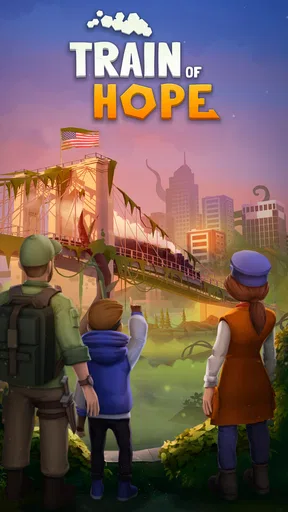
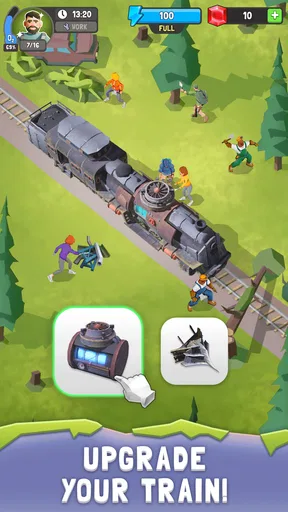
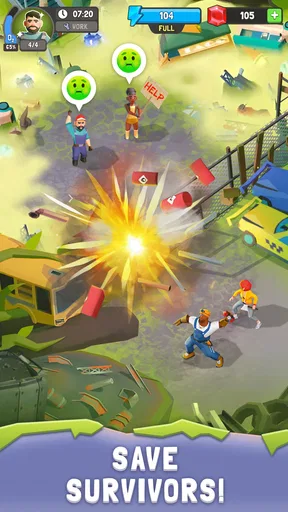
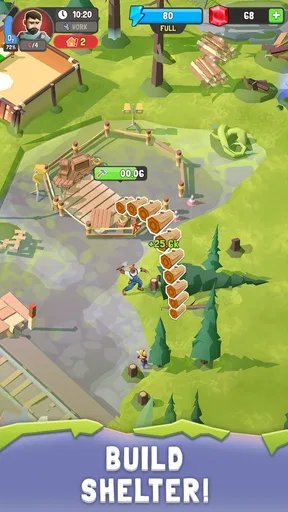
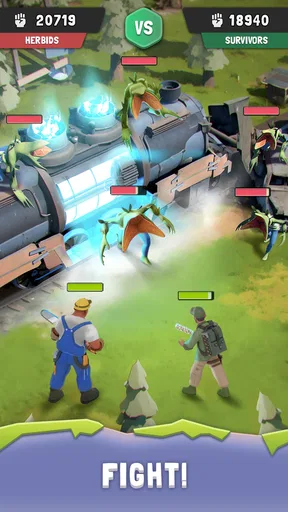
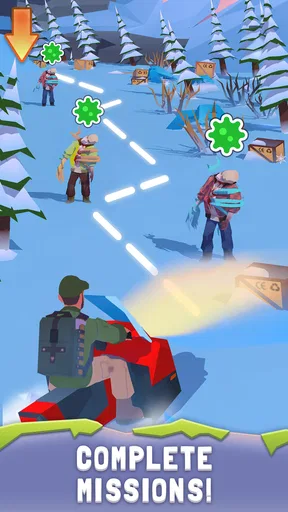
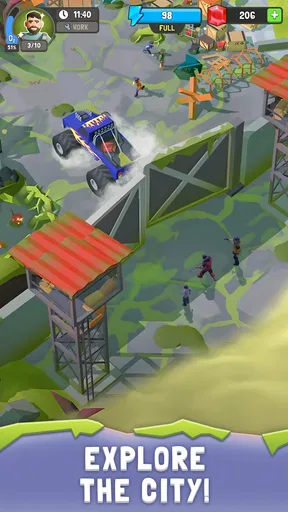
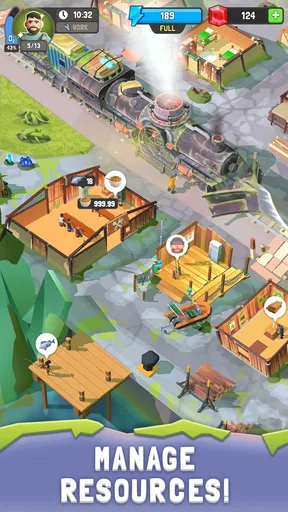
 Analysis by AppCompare
I approached Train of Hope: Survival Game expecting a fairly familiar mobile survival experience, but its train-centered setting gives the formula a more focused identity. Instead of treating the world as a collection of disconnected locations, the game frames survival around a journey through a damaged version of America. That simple idea changes how I think about progress: every resource, decision, and improvement feels connected to keeping the expedition moving.
This is a free simulation game from BELKA GAMES, aimed at players who enjoy gathering, exploration, light management, and a steady stream of objectives. It is rated Teen, runs on Android 7.0 or later, and has reached over 500 thousand installs. The current version is 1.23.0, while its average score sits at 4.4 from around 19 thousand ratings. Those figures suggest a healthy audience, but they do not replace the more important question: whether the rhythm suits the way you like to play.
What the journey feels like when you begin
The opening hours are built to make a large, dangerous setting feel manageable. You are not dropped into an empty wilderness with no direction. The train gives the adventure a clear center, while the surrounding landscape provides reasons to leave it, search for supplies, and deal with the consequences of a world that has already fallen apart.
I found that structure more approachable than survival games that begin with a huge map and a long list of crafting recipes. The train acts like a visual reminder of the larger goal. When I was unsure what to do next, I could usually return to the immediate question of what would help the journey continue. That kept the early game from becoming a random scavenger hunt.
The simulation label is important here. This is not simply an action game where the scenery is survival-themed. Much of the appeal comes from managing priorities: deciding what to collect, what to improve, and when to spend time exploring instead of pushing forward. Players who enjoy watching a small operation become more capable will probably get more from it than players looking for constant combat or instant rewards.
The post-apocalyptic setting also gives ordinary tasks more meaning. A supply run is not just a checklist item when the route itself represents safety and progress. Even small improvements can feel useful because they support the train and the people depending on it. I liked that sense of connection, although it also means the game can feel slower than a purely action-focused survival title.
My main advice for a first-time player is to treat the opening as a guided learning period rather than a race. The temptation is to tap through every available task as quickly as possible, but pausing to understand why an item matters will make later decisions easier. The game becomes more enjoyable once you stop viewing resources as isolated collectibles and start seeing them as part of a chain leading back to the train.
Worth Reading Before You Choose

Flipboard Shows What News Apps Must Do Beyond the Feed

Switching to Android Auto Means Rethinking Your Driving Routine

Google Calendar Makes a Crowded Week Easier to Manage

Ludo King Makes the Most of the Minutes Between Plans

Baby Panda World Brings Quick Play to Modern Phones, but Its Game Library Feels Busy

ESPN’s Live Game View Makes Following Close Games Easier
The right expectations for a free game
Because the game is free to download, the pacing is designed for repeated sessions rather than one uninterrupted push. In-app purchases range from $0.99 to $99.99 per item, so it is sensible to decide early whether you want to play patiently or spend money when progress feels demanding. I would not install it expecting every upgrade to arrive immediately.
That does not make the experience unsuitable for free players. It simply means that the best results come from choosing a routine. A short visit to collect what is ready, complete a useful objective, and prepare the next action feels more comfortable than trying to force a long session out of the game. If you dislike waiting, resource limits, or any pressure to consider purchases, this may not be the most relaxing survival option for you.
The Teen rating also sets a reasonable expectation about tone. The setting is bleak, but the presentation is built around an accessible game world rather than an uncompromisingly realistic survival simulation. I found it easier to recommend to someone who likes post-apocalyptic themes but does not necessarily want a punishing, technically demanding experience.
Setting up your first session without wasting effort
Once installed, I recommend giving the initial instructions your full attention. Early tutorials in games like this can look obvious, yet they often introduce the habits that determine whether the next few sessions feel smooth or frustrating. Tap through too quickly and it is easy to remember the immediate command while missing the reason behind it.
My first practical step was to identify the three parts of the loop: the train as the central project, the surrounding areas as sources of materials and tasks, and the upgrade or objective system as the way those materials become progress. Keeping those roles separate in your head helps prevent a common mistake: collecting everything without knowing which shortage is actually stopping you.
I also suggest checking the game’s current objective before wandering through every available activity. The most attractive location is not always the most useful one. If the next train improvement needs a particular kind of material, a focused trip is usually better than filling your limited inventory with items that have no immediate purpose. This is one of the first small decisions that makes the simulation feel more strategic.
Another useful habit is to leave a little room for unexpected finds. Carrying capacity and resource availability can turn a promising exploration trip into an awkward return journey if every space is filled with low-priority items. I learned to think in terms of “needed now,” “useful soon,” and “interesting but optional.” That simple sorting method reduced backtracking and made each visit to the map feel more deliberate.
How I handled the first meaningful success
The first satisfying success is not merely completing a tutorial tap. It is the moment when a collected resource directly enables an improvement or clears a meaningful obstacle for the train. To reach that point, I focused on one objective at a time instead of trying to improve every available element together.
That approach matters because early resources can feel plentiful while still being insufficient for several goals at once. Spending them impulsively may leave you with a train that has many partially completed improvements but no finished priority. Completing one useful step gave me a clearer sense of momentum and made the next objective easier to understand.
When exploring, I treated each trip as a small plan. Before leaving, I checked what I was trying to accomplish. During the trip, I collected the required materials first. Only after that did I pick up extras. On the way back, I used the return as a chance to review what the next task would require. This workflow is more efficient than reacting to every new item that appears.
The game rewards that kind of attention without demanding that you play perfectly. If you make a poor choice, the experience does not become permanently ruined. Still, a little planning prevents the most common early frustration: believing that you have made progress because your inventory is full, then discovering that none of it solves the current bottleneck.
Three practical habits that made a difference
- Follow the bottleneck, not the most visible reward. If an objective is blocked by one particular material, make that material the purpose of the next outing. This avoids spending time on attractive but irrelevant activities.
- Finish a priority before scattering resources. A completed improvement is usually easier to evaluate than several upgrades left halfway. I found this especially helpful when deciding whether the train or exploration should receive attention first.
- Use short sessions deliberately. A quick check-in can be worthwhile when it prepares the next action, collects available progress, or lets you return with a clear plan. The game suits routine play better than aimless tapping.
These habits are not complicated, but they reveal the game’s strongest quality: it turns a familiar survival loop into a sequence of manageable logistics decisions. The train gives those decisions a destination, while the landscape supplies enough uncertainty to keep the routine from feeling completely mechanical.
Where new players may become confused
The biggest source of confusion is understanding what deserves attention first. A survival game naturally encourages collecting, yet not every item has equal value at every moment. I initially had to resist the urge to gather everything simply because it was available. The better question is whether the item supports the current objective or a clearly upcoming need.
It is also easy to mistake movement for progress. Visiting a new area can feel productive, but exploration only becomes valuable when it produces something that advances the train, completes a task, or improves your ability to continue. If you finish a session with a busy inventory but no clear improvement, the game can seem slower than it really is.
Another point of friction is the difference between immediate rewards and long-term value. A quick completion may be tempting, especially when the game presents several possible actions. I preferred to compare the reward with the cost of leaving the train underdeveloped. Sometimes the short-term gain is useful; sometimes it merely delays the upgrade that would make future trips more comfortable.
Players may also wonder whether they need to spend money to enjoy the game. My experience is that spending is optional in principle, but the presence of in-app purchases means the pace may not always match your preferred tempo. If you are comfortable returning later and working through objectives gradually, the free entry point is appealing. If you want to remove every delay, the purchase structure becomes more relevant.
For that reason, I would be cautious about buying anything during the first session. Play long enough to decide whether the train-management loop actually holds your attention. A purchase can make a moment easier, but it cannot fix a mismatch between your taste and the game’s basic rhythm. I would only spend after understanding which part of the progression is genuinely valuable to me.
Who will enjoy this particular style
I think the game is a good match for someone who likes survival themes but prefers guided goals over complete freedom. It is also suitable for players who enjoy checking a project, making a few decisions, and returning later to continue. The train provides a stronger sense of direction than many open-ended mobile survival games, which can be helpful if you find huge maps overwhelming.
It may appeal to fans of management games who want a more adventurous setting. You are not simply arranging menus or optimizing a spreadsheet; you are connecting those decisions to travel through a damaged landscape. That combination gives the resource loop a little more personality than a standard construction simulator.
On the other hand, I would skip it if your ideal survival game is built around unrestricted building, deep character statistics, or demanding real-time combat. The appeal here is the journey and the steady management of progress, not the feeling of being dropped into a completely unstructured sandbox. Players who want a fast arcade experience may also find the deliberate pace too restrained.
A realistic everyday way to play
Imagine having a few minutes during a commute or after dinner. Instead of beginning a long expedition without a plan, open the game and check the current train-related objective. If you already have the needed materials, use the session to complete that improvement. If one item is missing, make a targeted trip for it and ignore distractions unless they fit naturally into the route.
When the session ends, leave yourself a simple next step: collect a particular resource, finish a specific upgrade, or inspect the next available task. That small note in your own memory makes the following visit much more satisfying. You are not reopening the game to search for direction; you are returning to a journey already in progress.
This routine also helps control spending. Short, purposeful sessions reduce the feeling that you must accelerate progress immediately. If an objective is not ready, returning later feels like part of the design rather than a failure. For me, that was a better way to experience the free model than treating every delay as a problem to solve with a purchase.
How it compares with familiar survival alternatives
Compared with a traditional survival sandbox, Train of Hope is easier to approach because its central train gives the experience a defined purpose. A sandbox may offer more freedom to build and experiment, but that freedom can also leave new players wondering what matters. Here, the journey provides a practical answer to that question.
Compared with a pure city-building or management game, it offers more of a sense of place. The surrounding post-apocalyptic America is not just decoration; it gives context to the supplies and objectives. You are managing a moving operation rather than developing a single permanent settlement. That distinction will appeal to players who prefer progress that feels like travel.
Compared with action-heavy survival games, the game is calmer and more methodical. I would choose it when I want to make a few thoughtful decisions rather than react constantly. I would choose a more combat-oriented alternative when I wanted immediate tension, direct control, and a stronger emphasis on moment-to-moment danger.
The trade-off is that the game’s identity depends heavily on whether you enjoy its progression loop. The train is a smart organizing idea, but it cannot make resource management exciting for someone who dislikes collecting and upgrading. In my view, it succeeds because it gives those familiar systems a clear narrative direction, not because it replaces them with something entirely new.
What to do after the opening goals
Once the first improvements are complete, I recommend resisting the urge to spread your attention across every available option. Choose the path that supports how you prefer to play. If you enjoy exploration, prioritize the choices that make repeated trips more comfortable. If you prefer steady objective completion, keep following the clearest train-related goal and use side activities only when they support it.
This is also the stage where patience becomes more valuable. Early progress can feel quick because the game is teaching its core loop. Later, the same loop asks you to plan more carefully. That is not necessarily a flaw, but it does change the mood. The game becomes less about discovering what is possible and more about deciding what deserves your limited attention.
I found it useful to judge progress by completed outcomes rather than by how many items I had collected. A modest inventory with a finished improvement felt better than a crowded inventory filled with uncertain possibilities. That mindset kept the game from becoming cluttered and gave each session a clearer sense of purpose.
It is worth remembering that the current version is 1.23.0, so the experience may continue to evolve through updates. I would still judge it by the loop available when you play: exploring, gathering, supporting the train, and choosing when to return. Those are the elements that determine whether it belongs on your phone, regardless of future additions.
After spending time with it, I see Train of Hope as a thoughtful choice for players who want a mobile survival game with a visible destination. Its strongest feature is not one isolated mechanic but the way the train ties exploration and resource decisions together. That connection makes the first meaningful success easy to understand: you gather with a purpose, spend with care, and watch the journey become more capable.
I would recommend trying it if you like simulation games, post-apocalyptic settings, and progress that works well in short, repeatable sessions. I would be more hesitant for anyone who wants a fully open sandbox, constant action, or a game with no pressure to consider paid acceleration. For everyone else, the free download offers a reasonable way to test the rhythm before deciding whether it deserves a longer place in your routine.
My final advice is simple: start slowly, focus on the next train-related need, and do not judge the game by the size of your first inventory. The real satisfaction comes from turning a carefully chosen handful of resources into a completed step forward. Once that connection clicks, the journey feels less like a list of mobile tasks and more like a survival expedition you are personally helping to keep alive.
Pros
- Engaging survival mechanics with meaningful choices and resource management.
- Atmospheric post-apocalyptic setting creates a strong sense of urgency.
- Train upgrades provide clear long-term goals and progression.
- Story events add variety beyond routine scavenging and crafting.
- Playable offline
- making it convenient for travel or limited connections.
Cons
- Resource shortages can make early progress feel slow.
- Some missions rely heavily on repeated scavenging activities.
- Limited storage space requires frequent inventory management.
- Difficulty spikes may frustrate players without careful preparation.
- Longer sessions can drain a device’s battery noticeably.
FAQs for Train of Hope: Survival Game
What is Train of Hope: Survival Game about?
Train of Hope: Survival Game is a post-apocalyptic survival and strategy adventure in which you travel through a devastated world aboard a moving train. You gather resources, explore dangerous locations, meet survivors, and make decisions that affect your journey. The train acts as your mobile base, so managing supplies, equipment, and passengers is essential for keeping everyone alive.
How does the train work in the game?
The train is much more than a way to move between locations. It functions as your main shelter and must be upgraded, repaired, and supplied throughout the adventure. You may need to improve different compartments, manage limited resources, and decide when it is safe to continue traveling. Careful planning is important because running out of fuel, food, or materials can seriously limit your progress.
Is Train of Hope: Survival Game free to play?
Train of Hope: Survival Game can generally be downloaded and played for free, although the experience may include optional in-app purchases. These purchases can provide resources, convenience items, or progression-related benefits, depending on the current version. Players who prefer not to spend money should still be able to enjoy the core adventure, but resource management and patience may be more important during longer play sessions.
Does the game require an internet connection?
An internet connection may be needed for the initial download, account services, advertisements, updates, and certain online features. Some parts of the game may work while offline, but this can vary by device, version, and the feature being used. Before starting a long journey without internet access, it is best to open the game online and confirm which functions remain available offline.
Is Train of Hope: Survival Game suitable for casual players?
The game can be enjoyed by casual players, especially those who like exploration, resource management, and story-driven survival experiences. However, it is not completely effortless: you must monitor supplies, make strategic choices, upgrade the train, and sometimes deal with dangerous encounters. Players who prefer relaxed progress should expect occasional waiting, planning, and repeated trips to collect the materials needed for upgrades.


